
The WPI inflation for September rose to 7.81 per cent, from 7.55 per cent in August.

The stock of Aditya Birla Fashion Retail is down 10 per cent from its February high. Even as the revenue performance of the apparel retail major in the October-December quarter's for the 2022-23 financial year (Q3FY23) was better than expected, the company saw brokerage downgrades, given the weak operating performance and the pressure on margins. This the second consecutive quarter of margin miss despite strong traction on the sales front.

C Rangarajan, former governor of Reserve Bank of India, was speaking on the topic `the growth path and some concernson the way' at a function at Federation of Gujarat Industries on Monday.

The precious metals continued its uninterrupted rally.

Moderating economic growth and easing inflation may prompt the Reserve Bank to halt interest rate hike in the upcoming mid-quarterly credit policy review later this month, according to analysts.

Textile stocks have exhibited a mixed performance so far this calendar year (CY23), amidst higher domestic cotton prices and tepid global demand. Shares of Page Industries, Dollar Industries, Lux Industries, and VIP Clothing have declined up to 13 per cent so far in CY23, as against a 9 per cent jump in the S&P BSE Sensex. On the contrary, shares of Arvind, Welspun India, Raymond, and Gokaldas Exports have gained up to 51 per cent, during the same period.

The Nikkei Markit India Manufacturing Purchasing Managers' Index (PMI) -- a gauge of manufacturing performance -- fell to 52.3, down from October's 22-month high of 54.4.

RBI has intervened throughout this year to prevent rupee strength although it has also stepped in at times of excessive weakness.

As food inflation spurted to a six-month high, Singh said the immediate challenge before the country is how to sustain a high growth path, while keeping inflation in check.

The Indian services sector activity fell to a six-month low in September, as new business inflows rose at the slowest rates since March, amid inflationary pressures and competitive conditions, a monthly survey said. The seasonally adjusted S&P Global India Services PMI Business Activity Index fell to 54.3 in September, from 57.2 in August, highlighting the weakest rate of expansion since March. For the fourteenth straight month, the services sector witnessed an expansion in output. In Purchasing Managers' Index (PMI) parlance, a print above 50 means expansion, while a score below 50 denotes contraction.
Petrol price hike will have a cascading effect and prices are going to go out of control.
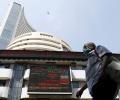
ITC was the top loser in the Sensex pack, shedding nearly 3 per cent, followed by Tech Mahindra, Axis Bank, Asian Paints, TCS, HCL Tech, HDFC and Kotak Bank.

India's economy continues to be robust, but downside risks such as rising crude oil prices, adverse weather conditions, and the global banking crisis outweigh the upside potential in gross domestic product (GDP) growth in the current financial year (FY24), the finance ministry said on Tuesday in its Monthly Economic Review for March. "We reiterate that downside risks to our official forecast of 6.5 per cent for real GDP growth in FY24 dominate upside risks," the review said. "Opec's surprise production cut has seen oil prices rise in April, off their lows of low-seventies per barrel in March.
Though Indian consumers continue to remain the most optimistic globally, their confidence level slipped by 5 points to 126 index points.
Defending the government's decision to raise prices of petroleum products, the Plan panel said on Wednesday it would suck money from the system and ease inflationary pressure in the long run.
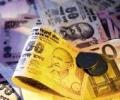
The multilateral lending agency said India's growth would ease to 8.2 per cent this financial year (2011-12) against 8.5 per cent a year ago, as high inflation had cut into disposable income and hence demand.

RBI has held its short-term lending (repo) rates unchanged at eight per cent since April 2012.
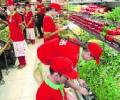
As part of an overall strategy of improving food management to reduce inflationary pressure, the food ministry has written to Prime Minister Manmohan Singh to incentivise organised retail trade in the farm sector.
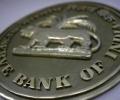
Supporting Reserve Bank's hawkish stance on monetary policy, Finance Minister Pranab Mukherjee on Tuesday said the increase in the key rates was necessary to contain inflation.

Food inflation numbers have moderated every week since early November when it stood at double-digit.

Falling food prices notwithstanding, consumer inflation will remain high during the current fiscal because of high cost of housing and services as well as the increasing inflationary pressures from smaller cities, Goldman Sachs said in a report on Tuesday.

With high prices remaining a concern, Prime Minister's Economic Advisory Council chairman C Rangarajan on Wednesday said all policy measures, like rate hikes and intervention in grain markets, will be undertaken to bring down inflation to comfort zone of 4-5 per cent.
"We had announced last year that the decision would be taken at an appropriate time to deregulate diesel, the government hasn't changed their decision... We have to see how the inflationary pressures go and take a decision," Revenue Secretary Sunil Mitra told reporters on the sidelines of an Assocham function.
Supported by greater demand from both domestic and external markets, total new business rose at the fastest pace since March

Finance Minister Pranab Mukherjee on Tuesday said the Reserve Bank's decision to hike short-term borrowing and lending rates will help contain inflation and was in line with the government's policy.
After topping it for two consecutive years, Gujarat slipped three places on the NITI Aayog's Export Preparedness Index (EPI) for 2022, as Tamil Nadu emerged as the most export-ready state, the central think tank said in its report released on Monday. In a continuing trend, coastal states were found to have the most robust export infrastructure, which officials attributed to the integration of maritime trade into the core of their economies. Maharashtra and Karnataka retained their positions -- second and third, respectively; Haryana was ranked first among landlocked states and fifth overall.

India's exports contracted by 22 per cent, the steepest decline in the last three years, to $32.97 billion in June on account of global demand slowdown, especially in the Western markets like the US and Europe. According to the data of the commerce ministry, the trade deficit in June stood at $20.3 billion against $22.07 billion in the same month last year due to a fall in exports and imports. The inbound shipments during the month under review declined by a steep 17.48 per cent to $53.10 billion.
The Reserve Bank on Friday said the option of going for another round of rate hike at its next mid-quarterly policy review in September do exist as inflationary pressure continues in the economy.

Households expect inflation to rise further by 170 basis points during the next 12 months.
Finance Minister Pranab Mukherjee, while speaking to media persons in New Delhi on Tuesday, said that India's economy is responding well. He also informed that the government took essential measures to tackle the adverse impact of inflationary pressure.

The report added that the rapid adjustments in the monetary and fiscal policies were well calibrated and not excessive, enabling the government to contemplate a return to fiscal consolidation in 2010-11 and an early normalisation of the monetary policy stance.

Most of India's oil supplies are expected to stay safe because of the country's good relations with both Russia and Iran. That would take care of over a third of India's supplies.
From the 30-share pack, Titan, Tech Mahindra, Maruti Suzuki India, Wipro, Nestle India, TCS, Larsen & Toubro, HCL Technologies, Tata Steel and HDFC Bank were among the major laggards. NSE Nifty declined 69.75 points to settle at 17,153.
Following are the highlights of the Economy Survey 2011-12, a report card of the Indian economic scenario.

Paring its early gains, benchmark BSE Sensex fell by 304 points on Wednesday as investors booked profit after recent gains amid concerns over inflation and supply constraints. Despite a firm start, the 30-share BSE barometer declined by 304.48 points or 0.53 per cent to settle at 57,684.82. During the day, it tanked 420.71 points or 0.72 per cent to 57,568.59.
Multilateral lending agency Asian Development Bank has revised upwards India's growth projection to 6 per cent for the current fiscal on account of rising business confidence but warned that inflationary pressure would continue.
Benchmark equity indices Sensex and Nifty pared their early gains to close nearly 1 per cent lower on Monday as surging oil prices played spoilsport amid prolonged Russia-Ukraine war. The 30-share Sensex plunged by 571.44 points or 0.99 per cent to settle at 57,292.49. During the day, it tanked 634.85 points or 1.09 per cent to 57,229.08. The broader NSE Nifty declined by 169.45 points or 0.98 per cent to finish at 17,117.60. Among Sensex constituents, Power Grid, Asian Paints, UltraTech Cement, Nestle, Hindustan Unilever Limited and HCL Technologies were among the major laggards.
Responding to the price rise debate in Lok Sabha, Mukherjee said that it should be tackled by leaders across all the political parties.

In its 'Asia Economic Alert', the banking and asset management behemoth also said that the Reserve Bank is likely to hike the short-term lending (repo) rate by 100 basis points in 2011 with the purpose of curbing inflationary pressure.
Urban households expect inflationary pressure to sustain through 2011 and feel there may not be any softening of food prices, an RBI survey shows.
